How Pocket Prep Increased Marketing Attribution Accuracy from under 50% to 98%
Client
Industry
Headquarters
Customer since
0
percentage-point increase in marketing attribution coverage
0x
more revenue became attributable to marketing campaigns
About Pocket Prep
Pocket Prep is a leading exam preparation platform that helps students and professionals prepare for certification, licensing, and career-advancement exams through personalized study tools, practice questions, and mobile-first learning experiences.
More info at: https://www.pocketprep.com/

The challenge
When we audited their attribution setup, we discovered that less than half of web signups could be connected to a marketing source, leaving the majority of new customer acquisitions unattributed.
This created several challenges:
❌ Marketing ROI could not be measured accurately.
❌ Budget allocation decisions were based on incomplete data.
❌ Paid acquisition performance was significantly underreported.
❌ Revenue generated by marketing campaigns could not be reliably attributed back to specific channels.
Further investigation revealed multiple structural tracking issues that prevented visitor journeys from being connected across the marketing website and application environment.

The Goal
Pocket Prep wanted to answer a simple but critical question:
Which marketing activities are actually driving revenue?
To do that, Pocket Prep needed a marketing attribution system capable of tracking visitors from first touch through signup and purchase with much higher accuracy.
Our Approach
We implemented a custom first-party marketing attribution infrastructure designed to eliminate the limitations of using third-party tracking tools.
The project included:
1. Attribution Architecture Audit
We analyzed the complete visitor journey and identified where attribution data was being lost.
The audit uncovered three major sources of attribution loss:
- Tracking gaps between marketing pages and signup flows.
- Analytics scripts blocked by privacy tools and ad blockers.
- Loss of visitor identity across different product environments.
2. First-Party Attribution Tracking
We deployed a first-party attribution library that records visitor acquisition data directly within Pocket Prep's own infrastructure instead of relying exclusively on third-party analytics platforms.
This approach dramatically reduced attribution loss caused by:
- Browser privacy protections
- Ad blockers
- Restrictions on cookies set by third-party scripts
3. Marketing Data Warehouse Integration
We built a dedicated attribution layer inside Pocket Prep's data warehouse, enabling:
- Campaign-level performance measurement
- Ad platform conversion syncing
- Revenue attribution reporting
- Long-term customer journey analysis
4. Google Ads Attribution Enhancement
The new setup also enabled:
- Reliable click-to-conversion matching
- Conversion feedback loops into Google Ads
- Campaign-level ROI reporting
- Better optimization signals for ad algorithms

Results
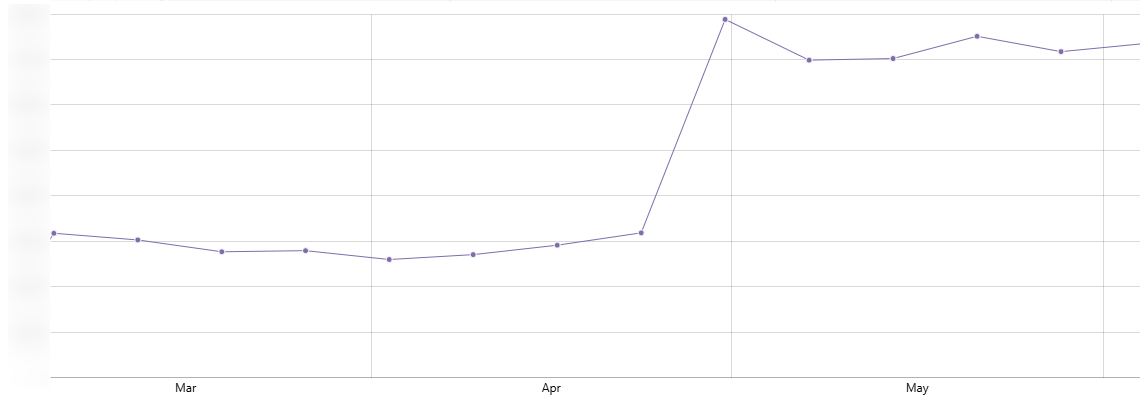
Attribution Accuracy Increased from under 50% to 98%
Before implementation, less than 50% of web signups could be connected to a known traffic source.
After implementing the first-party attribution framework, 98% of web signups could be linked to a known traffic source.
More Than 4× Improvement in Revenue Attribution Visibility
Because far more users could now be linked to their acquisition source, Pocket Prep gained better visibility into marketing-generated revenue.
The attribution system increased measurable revenue visibility by more than 4x, creating a reliable foundation for ROI analysis and future marketing optimization.
Business Impact
The project transformed attribution from a reporting challenge into a strategic asset.
Pocket Prep can now:
✔ Measure campaign ROI with confidence.
✔ Send conversion signals back to advertising platforms.
✔ Optimize campaigns using actual business outcomes.
✔ Build customer lifetime value reporting.
✔ Scale paid acquisition with significantly less uncertainty.
Key Takeaway
Many companies assume attribution loss is simply the cost of privacy changes, browser restrictions, and ad blockers.
Pocket Prep's experience showed otherwise.
By replacing a fragmented analytics setup with a purpose-built first-party attribution framework, the company increased attribution coverage from under 50% to 98% and gained more than 4× greater visibility into marketing-driven revenue.